Noise Reduction Landscaping: Smart Ways to Block Outdoor Noise
In many residential locations, outside noise is a common source of concern. The comfort of a garden or outdoor living space can be impacted by traffic, nearby houses, building activities, and crowded public areas. Even while it is sometimes hard to completely eradicate noise, careful landscape design may lessen its effects and foster a calmer atmosphere. Noise reduction landscaping can help interrupt, absorb, or hide undesirable noise through a combination of natural and built landscape elements. Reducing noise may enhance privacy and make outdoor spaces more comfortable. Whether the house is next to a busy road or within a dense urban community, intelligent design may make a huge impact.
read more: Architect in Melbourne
How Landscape Design Can Reduce Outdoor Noise Pollution
Noise can be reflected off hard surfaces like concrete, paving, and building walls. On the other hand, plants, dirt, and textured materials can help absorb and spread the noise. Acoustic comfort may be greatly increased by placing outdoor entertainment spaces away from substantial noise sources, establishing tiered planting zones, and adding physical barriers.
The goal is not necessarily complete silence. Successful noise reduction landscaping seeks to diminish intrusive sounds and create a more balanced and pleasant outdoor environment.
read more: Essential Modern Building Principles
1.Use Earthen Berms to Block Traffic and Street Noise
An earth berm is a raised area in landscaping that serves as a barrier separating a property from any source of noise pollution. They are frequently utilized near roads, highways, and public areas where traffic noise is an issue. Because berms are made of dirt, they may effectively block the direct route of sound waves. Berms can be designed to fit in with their surroundings, preventing them from sticking out as an ugly noise barrier. Berms become more effective as their height, breadth, and location relative to the noise source increase. Minor elevation modifications can make a significant effect in the quality of the outside environment by lowering vehicular noise pollution.
read more: How To Increase Natural Light In Your Home
2.Install Solid Privacy Fences for Better Sound Control
Barriers are a common way to reduce noise around homes. Solid fences generally block sound better than open designs with gaps or decorative screening. Timber, masonry, and composite panels can block sound by separating the noise source from the outdoor living space. When combined with planting, berms, and other landscape elements, fences can reduce noise. They also enhance seclusion and define outdoor spaces. A higher fence near the noise source works better than a shorter one.
read more: Commercial Architects in Melbourne
3.Plant Dense Evergreen Trees as Natural Noise Barriers
Outdoor habitats benefit from shade and filtering from trees. They can help reduce noise in landscaping if chosen and placed properly.Thick evergreens are favoured since they keep their leaves all year. This gives them more consistent screening and acoustic benefits than deciduous trees.Reduced road and property view can also improve noise perception. Consider local climate, care, and growing area before picking species.
4.Create Thick Hedges to Help Reduce Outdoor Sound Transmission
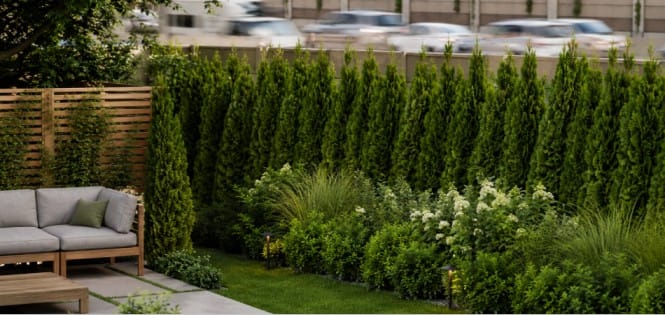
A noise reduction approach might use hedges as secondary barriers. Dense greenery absorbs and scatters sound and visually buffers outdoor living areas.Hedgerows seem more natural than fences. Use them along boundaries, around entertainment areas, and between garden zones.Thick, evergreen, close-planted hedges reduce sound best. While hedges alone won’t block road noise, they can help when coupled with fences, berms, or trees.
read more: Best Outdoor Living ideas
5.Add Water Features to Mask Unwanted Background Noise
Noise reduction does not always block sound. Introduction of pleasant noises may often hide background noise.Water sounds may mask traffic, distant voices, and other urban noises.
Water features may enhance a garden’s environment and relaxation in addition to acoustic advantages.
6.Incorporate Acoustic Screens and Noise Barrier Panels
Specialised acoustic screens may reduce noise more effectively. Built to absorb or deflect sound, these technologies are employed. Modern acoustic panels come in many materials, coatings, and layouts. Some merge into residential surroundings, while others fit into modern gardens. Acoustic screens are important when space is restricted and dense planting may not be enough.
These devices can increase acoustics without dominating the garden if correctly integrated into the landscape design.
read more: Smart Ways to Renovate Sustainably
7.Build Vertical Gardens for Additional Sound Absorption
Vertical gardens are growing in metropolitan areas with limited space. By adding flora to buildings and structures, they offer greenery without taking up garden area. Vegetation and growing medium absorb sound and lessen hard surface reflections. Vertical gardens improve aesthetics, biodiversity, and sustainability. Vertical gardens, however seldom employed as a noise barrier, can enhance acoustic landscape strategies when paired with other measures.
8.Layer Multiple Landscaping Elements for Maximum Noise Reduction
The property might include a berm along the boundary line, with a solid fence behind it, dense plantings in the garden and a water feature near the outdoor gathering space.
Some components act as barriers to sound, others absorb sound, and others help camouflage noise. Layers are usually a much better approach than any single strategy and help to create a more harmonious landscape design.
9. Choose Sound-Absorbing Ground Covers and Mulch
Ground surfaces affect landscape sound. Hard materials like concrete and pavement reflect sound, whereas softer ones absorb it. Organic mulches, planted ground coverings, and other textured surfaces reduce sound reflection, making the outdoors quieter. Although less effective than fences or berms, these materials are part of a noise management approach. They also increase soil health, retain moisture, and reduce weeds.
read more: Architect in South Melbourne
10.Design Strategic Landscape Layouts to Minimise Noise Exposure
Long-term acoustic comfort is frequently most affected by good planning. The placement of outdoor areas might alter everyday noise. Outdoor dining, sitting, and gathering spaces work best away from main noise sources. DW Architects incorporates landscape planning into the design process to address noise, privacy, and usefulness.
Conclusion
Modern urban living involves noise, but landscape design may mitigate it. From earthen berms and strong fences to dense planting, water features, and acoustic screening, several methods may make outdoor spaces quieter and more comfortable.Noise Reduction Landscaping solutions that match site circumstances work best. Using numerous landscape features and considering noise early in the planning process may make outdoor areas more private, useful, and pleasurable.
At DW Architects, landscape design is viewed as an important part of the overall living experience. Careful planning and well-considered design decisions can help outdoor spaces perform better while supporting long-term comfort and usability.
Frequently Asked Questions
1. Can Landscaping Really Help Reduce Outdoor Noise Levels?
Yeah. Landscaping is unlikely to completely eliminate noise, but it may make a huge difference to the level of noise and intrusiveness. The best outcomes are frequently achieved by combining obstacles, planting, and sound-masking measures.
2. What Are the Most Effective Plants for Noise Reduction Landscaping?
Dense evergreen plants tend to do well since they keep their foliage year-round. Typical noise reduction measures include the use of thick hedges, screening bushes and closely planted trees.
3. How Much Space Is Needed for a Noise-Blocking Landscape Buffer?
The space required depends on the degree of noise and the solution chosen. Dense planting zones may need several metres of depth, yet fences and acoustic screens can be useful in smaller areas.
4. Are Trees and Hedges Better Than Fences for Sound Control?
Each choice has a distinct function. Solid fences tend to give more sound blocking. Trees and hedges provide sound absorption, visual screening, and overall landscape quality. Sometimes the best approach is a blend of the two.
5. What Is the Best Landscaping Solution for Traffic Noise?
Rarely is there a single answer. For the greatest outcome, properties affected by traffic noise can typically benefit from a mix of berms, sturdy fences, dense plantings, and careful site layout.