
The Future of Sustainable Urban Living: How Smart Cities Are Transforming Urban Life
Cities are changing quickly. Population growth, environmental challenges, the demand for housing and new technologies are all influencing how cities are planned and managed. Many cities are therefore taking a smarter approach to development, looking to enhance efficiency, sustainability and quality of life. A smart city is more than just technology. Digital technology and data are crucial, but so are design, environmental performance, and how people engage with public areas in creating successful urban places.
From green infrastructure and renewable energy to innovative housing patterns and community focused design, smart cities are changing the future of sustainable urban life. As cities continue to grow, the problem isn’t just finding room for more people. It requires providing environments that are enduringly comfortable, functional and enjoyable to live in over time.
read more: Architect in Melbourne
How Green Roofs Are Transforming Modern Urban Spaces
Green roofs are becoming a more common feature of contemporary urban development. In densely populated places where open green space may be limited, rooftops provide valuable opportunities to bring flora into the city. The benefits extend well beyond looks. Green roofs can help to offset the urban heat island effect which happens when built up areas become much warmer than surrounding areas due to large expanses of hard surfaces and a lack of vegetation. Buildings with planted rooftops can help reduce local temperatures. Stormwater management is another important benefit. This is made possible by plants’ ability to absorb rainfall.
Urban drainage systems will therefore experience less strain during storms. This becomes increasingly valuable as many cities experience more frequent storm events. Green roofs also provide a habitat for a range of wildlife, such as birds and insects, and indeed any kind of animal that may struggle to find a place to call home in an urban setting. In some developments, green roofs also function as communal or recreational spaces. In addition to its benefits for the environment, green roofs improve buildings’ thermal insulation, which lowers the amount of power they use in the summer or winter.
read more: Essential Modern Building Principles
Vertical Gardens and the Rise of Sustainable City Design
Architects and planners are finding new ways to introduce greenery into limited spaces. Vertical gardens have become one of the most visible examples of this shift. Vertical gardens, unlike regular gardening, use walls and building facades to support vegetation. This enables greenery to be introduced into situations where ground level planting options may be restricted. The result is often a greener and more attractive urban environment.
Vegetation can provide additional insulation, helping regulate indoor temperatures and reduce energy consumption. By absorbing and dispersing sound, vertical gardens can contribute to the reduction of noise levels in overcrowded metropolitan areas. At DW Architects, sustainable design solutions are frequently explored as part of a broader strategy to create healthier, more liveable environments.
read more: How To Increase Natural Light In Your Home
Shared Living Spaces Crafting the Future Urban Communities
People’s lifestyles are changing and so are the pressures that come with them. As housing costs rise and lifestyles change, a growing number of individuals are looking into new ways to make city living a realistic option. Shared living situations are becoming more popular in many cities as individuals seek more flexibility, affordability, and possibilities for social interaction. In these types of developments, residents often have their own apartments with common kitchens, offices, gardens, living rooms, and recreational spaces. Although not completely novel, modern shared living concepts are being developed with a stronger focus on privacy, practicality, and community involvement.
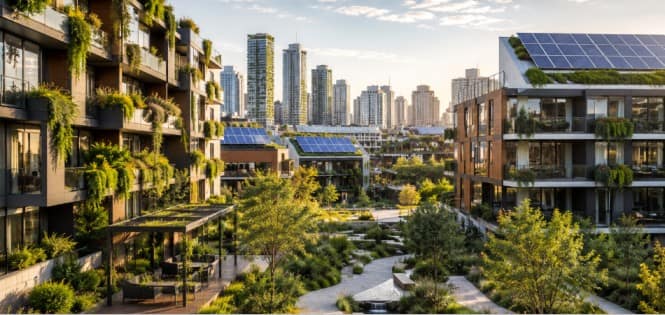
One of the main advantages is the more efficient use of available space. Shared facilities reduce duplication while providing access to a wider range of amenities. This is especially helpful in dense urban settings where space is scarce. Apart from the obvious improvements to daily living, communal spaces also serve the purpose of bringing people together. Well-designed public spaces foster connection while respecting each person’s privacy.
For a multi-tenant apartment complex, good planning and design can be the key to success. The quality of the design and maintenance can have a significant impact on how tenants experience and use common spaces, circulation areas, and the overall layout of a building. The importance of shared housing models in meeting the needs of housing and community is expected to grow as cities continue to evolve.
read more: Commercial Architects in Melbourne
Integrating Renewable Energy into Sustainable Urban Development
Renewable energy is becoming integral to sustainable urban development. As cities work to cut carbon emissions and increase resilience, alternative energy sources are rapidly being incorporated into new and existing infrastructure. Solar energy remains one of the most widely adopted renewable energy solutions. Rooftop solar systems provide power near to the point of consumption, therefore reducing operating emissions and dependence on centralised energy infrastructure.
Technological developments in battery storage are also enhancing communities’ and buildings’ capacity to better control energy use. By adapting dynamically to consumption patterns, smart energy grids are assisting cities in optimising the distribution of energy. These technologies can facilitate the integration of various renewable energy sources throughout urban regions, increase efficiency, and cut waste.
Many communities are also looking at district energy systems, where several buildings share infrastructure for heating, cooling or power. Shifting towards renewable energy is not just an environmental goal. It helps to build economic resilience for the long-term by mitigating exposure to price shocks in energy markets while supporting greater energy independence. In the wake of technological development, renewable systems are anticipated to play a larger role in future urban planning strategies.
read more: Architect in South Melbourne
Building a Greener and More Sustainable Urban Future
Building sustainable cities goes beyond just implementing individual environmental initiatives. Strategic planning, prudent resource management, community oriented design, and longterm vision are the hallmarks of the most successful urban settings. Green roofs, vertical gardens, shared living models and renewable energy systems are all part of the larger picture of urban sustainability. Each of these is a great benefit individually but perhaps the greatest value is in combining them together in a coordinated way of city planning and development.
Future cities will need to balance population growth with environmental responsibility while still providing pleasant, useful and attractive places to live. Achieving this balance will require collaboration between architects, planners, developers, governments and communities. At DW Architects, sustainable urban living is viewed as an ongoing design challenge that extends beyond individual buildings. By considering how people interact with their environments and how developments perform over time, it becomes possible to create urban spaces that are more resilient, efficient, and enjoyable for future generations.
Frequently Asked Questions
FAQ 1: What is smart city development in sustainable urban living?
Smart city development refers to the use of technology, data, and intelligent urban planning to improve sustainability, efficiency, and quality of life. It includes green infrastructure, renewable energy systems, smart housing design, and better use of public spaces to create more livable and environmentally responsible cities.
FAQ 2: How do green roofs contribute to sustainable urban living?
Green roofs help reduce urban heat, improve insulation, and manage stormwater by absorbing rainfall. They also support biodiversity by creating habitats for birds and insects, while improving energy efficiency in buildings and providing additional green space in dense urban environments.
FAQ 3: What are the benefits of vertical gardens in cities?
Vertical gardens improve air quality, reduce noise pollution, and enhance building insulation by using walls and facades for planting. They are especially useful in dense urban areas where ground space is limited, helping to introduce greenery and improve overall urban aesthetics and comfort.
FAQ 4: Why are shared living spaces becoming more popular in modern cities?
Shared living spaces are growing in popularity due to rising housing costs, changing lifestyles, and the need for more flexible urban living. They offer shared amenities such as kitchens, gardens, and workspaces, promoting affordability, efficient space use, and stronger community connections.
FAQ 5: How does renewable energy support sustainable urban development?
Renewable energy, such as solar power and smart energy grids, helps reduce carbon emissions, improve energy efficiency, and increase energy independence. It also supports long-term economic resilience by reducing reliance on fossil fuels and centralised energy systems.
Recent Comments