Best Outdoor Furniture for Australian Gardens
Australian gardens are usually made for living in rather than just looking at. Whether it’s a little courtyard in the suburbs, a family backyard, or a bigger landscaped property, outdoor areas frequently become extensions of the home. You can have family get-togethers, barbecues on the weekends, quiet mornings, and long summer nights there. So, there’s a lot more to consider than just making a decorative statement while shopping for outdoor furniture.
Comfort, ease of movement about the home, and the integration of indoor and outdoor spaces can all be enhanced with well-chosen furnishings. Australia’s climate also places particular demands on outdoor furniture. Materials performance is affected by strong sunshine, seasonal storms, coastal conditions, and changes in temperature over time. Choosing your outdoor furniture wisely from the beginning will help you create a space that remains functional, comfortable and attractive for years to come.
read more: Architect in Melbourne
Choosing Durable Materials for Australian Outdoor Furniture
if you need outdoor furniture for an Australian garden, durability should be one of the first considerations. Exposure to weather often reveals the difference between furniture designed for outdoor use and pieces chosen mainly for their appearance in a showroom. Timber continues to be popular because of its warmth and natural look. Hardwoods such as teak, spotted gum, and blackbutt are highly valued for their durability and attractive aging. Timber requires some care over time, but many homeowners love the character it creates.
Another viable choice is aluminium. It is resistant to corrosion, which makes it perfect for coastal areas. Powder-coated aluminium offers both functionality and aesthetics. The most successful material choices are often the ones that are a direct response to the requirements of the site. A garden exposed to strong coastal breezes may need different furniture than a sheltered suburban courtyard. At DW Architects, material selections are often considered alongside broader site conditions, helping outdoor spaces remain functional and durable over the long term.
read more: Essential Modern Building Principles
Blending Comfort, Style, and Function for Better Outdoor Living
Style is great, but if the furniture isn’t comfortable or practical, the space won’t get used. Beautiful outdoor furniture isn’t enough if it doesn’t feel good to sit on. An attractive outdoor arrangement may catch people’s attention at first, but if the seating is uncomfortable or difficult to maintain, that area will sit vacant the majority of time. Comfort is about proportion. Chairs should encourage relaxed sitting positions, dining should provide enough space to move around, and lounge areas should allow for longer use. Cushions and upholstery can be added to increase comfort, provided they are designed for outdoor use.
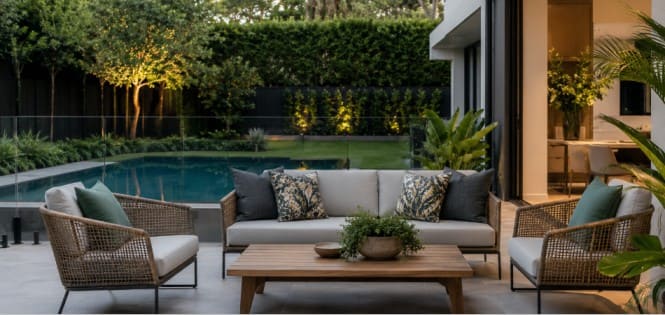
Another important factor is functionality. It is also worth considering how the garden will be used throughout the year. Comfortable seating areas may be more appropriate for smaller houses, but families often need multipurpose furniture for gatherings of various sizes. When you hit the optimal point of comfort, functionality and beauty, your outdoor space will feel incredibly inviting and remain classic over time.
read more: How To Increase Natural Light In Your Home
Top Outdoor Furniture Trends for Australian Homes
As more Australians are taking up outdoor living, the way we choose and style outdoor furniture is changing right along with it. Trends may constantly change but a few larger movements are definitely influencing the design and feel of modern gardens. There has been an enormous rise in the popularity of outdoor rooms. More and more people are reimagining outdoor areas as seamless extensions of their homes, rather than viewing the garden as an independent zone. Outdoor rugs, furniture pieces that match, and multiple layers of lights can all help the space flow from inside to outside.
Natural materials still dominate. Finishes such as timber and stone, textured textiles and earthy colour palettes all reflect a greater desire for rooms that feel connected to nature.
Modular furniture has also become popular due to its flexibility. Configurations can be customised for different occasions and the outdoor spaces easily lend themselves to entertaining, family use or quiet relaxation. There’s a rising interest in furniture that straddles the line between indoor and outdoor design. Importantly, many trends today favour longevity over novelty. More and more, homeowners are opting for timeless pieces that transcend changing design trends, not chasing after fads.
read more: Commercial Architects in Melbourne
Sustainable Outdoor Furniture Ideas for Modern Gardens
Sustainability has become an increasingly important consideration in outdoor design. When materials, manufacturing procedures, and lifetime are all taken into account, furniture choices can have a significant impact on environmental responsibility. Manufacturers are also creating outdoor furniture in more eco-friendly ways, such as minimizing waste and using ecofriendly materials. Even if they cost more to start with, they tend to be worth more in the long run.
Occasionally, the most sustainable option is to buy furniture that will last. Products that need to be replaced every few years tend to have a bigger environmental footprint than durable alternatives meant for longterm use. Reclaimed wood is a great example of a material that can last for a long time. It gives old materials a second chance at life and gives outdoor spaces a unique look and feel. In the same way, using recycled metals and wood that comes from responsible sources can lower the damage that making furniture does to the earth.
read more: Architect in South Melbourne
Expert Advice on Keeping Outdoor Furniture in Good Condition for the Long Term
Maintenance is essential, even for high quality outdoor furniture. By taking certain easy precautions, you can keep its beauty and function intact for a much longer period of time.
Cleaning on a regular basis is usually the best way to keep something in good shape. Surfaces can get dirty, wet, and full of dust if you don’t clean them. Maintenance routines do not need to be complicated. Additional protection from severe weather conditions can be obtained by using protective coverings, especially during extended periods of rain or high temperatures. While many outdoor materials are built to endure exposure, limiting needless wear may help keep them in good shape.
Timber furniture often requires frequent treatment to preserve its beauty and protect against deterioration. Different species need different care strategies; manufacturer guidelines should always be followed.Metal furniture should also be periodically checked for wear or damage to the coating. This is especially true in coastal areas where exposure to salt can speed up the degradation of the furniture. Often, early action can help avert larger problems down the line. Fabrics and cushions also need to be taken into account. Choosing good quality outdoor fabrics will decrease fading and moisture retention, and storing them properly during harsh weather will help extend their lifespan. Regular maintenance is seldom difficult, but it is critical to safeguard your investment in outdoor furniture.
Conclusion
The right outdoor furniture can convert a garden from a visual display to a truly practical living place. The best outdoor spaces are durable, comfortable, stylish and functional, and are also sensitive to local climatic conditions.Thoughtful choices made at the outset, from choosing durable materials to considering green alternatives to creating rooms that can be used for both entertaining and relaxing, tend to reap the most rewards over the long run. At DW Architects, outdoor living is considered an important part of the broader design process. When gardens, patios and outdoor gathering areas are planned alongside the home itself, they often feel more connected, functional and enjoyable over the long term.
Frequently Asked Questions
FAQ 1: What is the best outdoor furniture material for Australian gardens?
The best outdoor furniture materials for Australian gardens are those that can withstand harsh sun, rain, humidity, and coastal conditions. Popular options include hardwoods such as teak, spotted gum, and blackbutt, as well as powder-coated aluminium, which offers excellent durability, corrosion resistance, and low maintenance.
FAQ 2: How do I choose outdoor furniture that is both stylish and practical?
When selecting outdoor furniture, focus on comfort, durability, and functionality alongside appearance. Look for weather-resistant materials, comfortable seating, outdoor-grade cushions, and versatile furniture that suits your lifestyle. The most successful outdoor spaces balance aesthetics with everyday usability.
FAQ 3: How can I make my outdoor furniture last longer?
Regular maintenance is essential for extending the life of outdoor furniture. Clean surfaces regularly, use protective covers during extreme weather, treat timber furniture as recommended, and inspect metal frames for signs of wear. Choosing high-quality outdoor fabrics and storing cushions properly can also help preserve their appearance and performance over time.